Indian languages witness renaissance at World Book Fair 2026, regional language stalls draw massive footfall
World Book Fair 2026 showcases a revival of Indian languages, with regional literature, multilingual dialogue and global participation taking centre stage.
A strong literary revival of Indian languages was clearly visible at the World Book Fair 2026. Stalls showcasing Hindi, Assamese, Urdu, Punjabi, Kannada, Odia, Gujarati, Telugu, Bangla, Malayalam and Sindhi attracted large crowds across halls at Bharat Mandapam.
Young readers and children showed keen interest in books published in their mother tongues, signalling that even in the digital age, the appeal of print and Indian languages remains strong.
Mother tongue learning gains momentum
The spirit of Padhega India to Badhega India found renewed expression through regional languages. Hindi stalls featured not just literary works but also books on science, technology and diplomacy.
With the New Education Policy placing emphasis on education in the mother tongue, publishers reported growing demand for regional-language editions of academic and reference books.
‘Epic of Kudopali’ expands multilingual reach
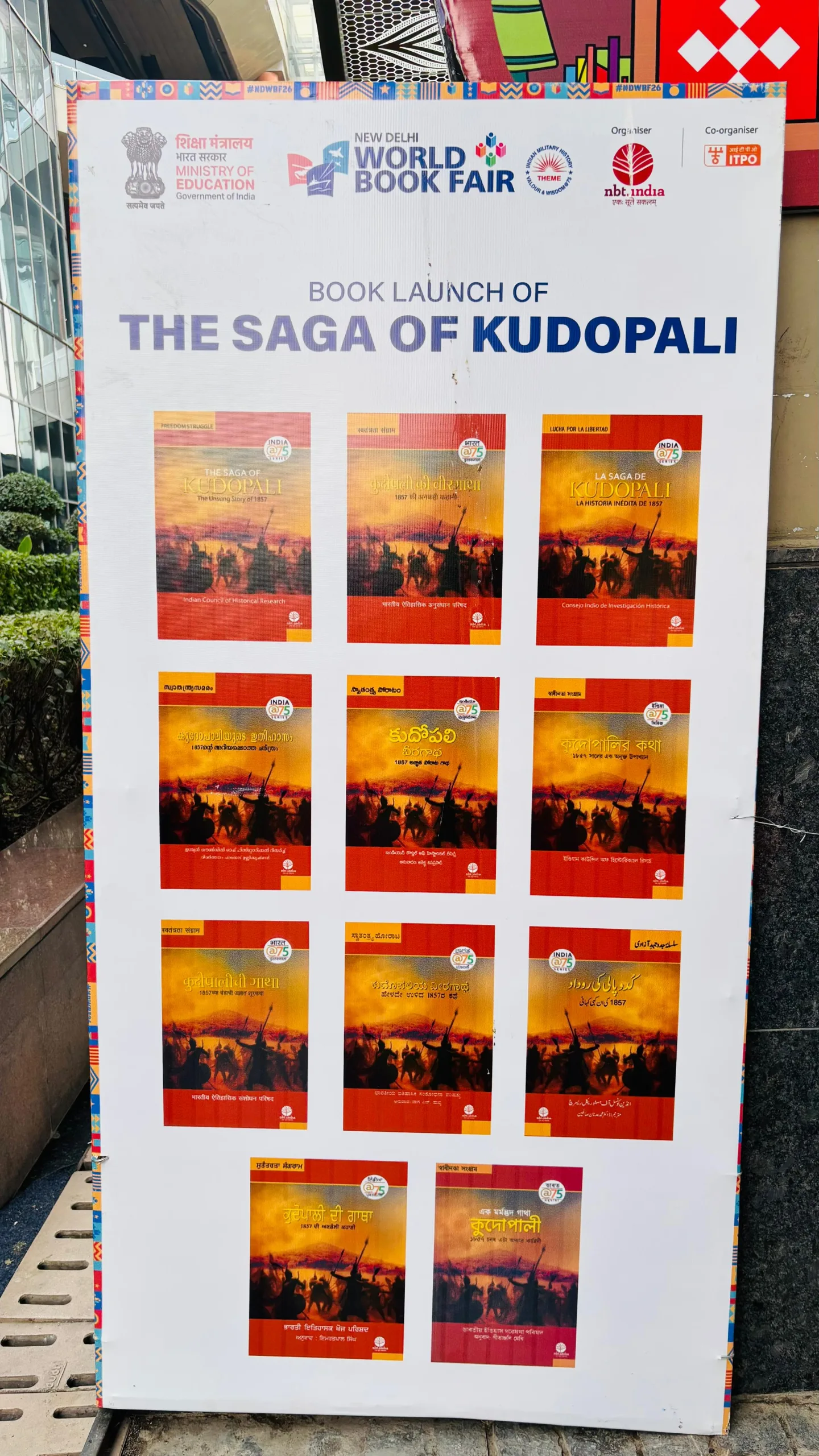
A notable highlight of the fair was the multilingual expansion of The Epic of Kudopali. The book is now available in 13 languages, including Bengali, Assamese, Punjabi, Marathi, Malayalam, Urdu and Spanish. Earlier editions had been published in Hindi, English and Odia.
This initiative honours the legacy of Veer Surendra Sai ji and the martyrs of Kudopali, while strengthening India’s tradition of multilingual dialogue with a global outlook.
A living portrait of India’s linguistic diversity
Visitors witnessed a vivid display of linguistic diversity as stalls representing 10 to 12 Indian languages stood side by side in the same hall. Readers experienced a rich multilingual atmosphere, reinforcing the idea that the fair has evolved beyond a marketplace for books into a platform that nurtures language, culture and identity.
The fair features nearly 3,000 stalls and around 1,000 publishers from approximately 35 countries.
Indian language literature shapes future readers
World Book Fair 2026 reaffirmed that literature in Indian languages is not only thriving but also shaping curiosity for knowledge and culture among future generations. The enthusiasm among young readers reflected the growing relevance of regional literature in contemporary times.
The International Events Corner emerged as a vibrant platform for global literary exchange. Writers, poets and academicians from Europe, Asia and America participated in discussions on themes such as nature, memory, displacement, translation and technology.
These sessions positioned literature as both a medium of cultural exchange and a space for contemporary global discourse.
Russian author and forest officer Ilya Kochergin described writing as a dialogue with the natural world. Referring to his book Emergency Exit, which explores his bond with an aged horse, he highlighted literature as a meeting point of human and non-human life, where language must continually evolve to remain connected with modern readers.
Experts noted that the platform has strengthened the international stature of the World Book Fair, demonstrating that an Indian literary forum can play an active and influential role in global literature.
The New Delhi World Book Fair 2026 underscores its global significance with participation from over 35 countries, spotlighting cultural exchange, translation initiatives and India’s growing soft power in the international publishing ecosystem.
New Delhi World Book Fair 2026, Day 3 highlighted Indian military history, cultural discourse, poetry, women’s voices, children’s literature and folk music, drawing massive crowds and dignitaries.